
Presentation at IHK Economic Commitee
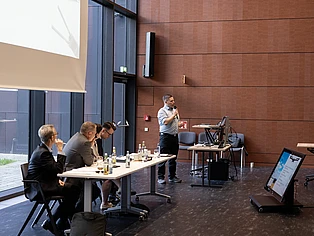
VALOFLY GmbH was invited by the Hanover Chamber of Industry and Commerce (IHK) – Göttingen Office – to attend the joint meeting of the Economic Committee and the Regional Assembly of the Kassel-Marburg Chamber of Industry and Commerce (IHK). The conference focused on security and resilience. The joint meeting took place at the Gesellschaft für Wissenschaftliche Datenverarbeitung mbH Göttingen (GWDG). The focus was on (cyber) security, sabotage, and disinformation, which create a complex security situation for companies.
In his opening remarks, Prof. Dr. Ramin Yahyapour presented the work of the GWDG and discussed the current cybersecurity challenges the GWDG is facing as a high-performance computing center. He outlined solutions, approaches, and possibilities for protecting the GWDG, its employees, and the users of its services in the digital space, as well as for creating and further developing resilient infrastructure to protect servers.
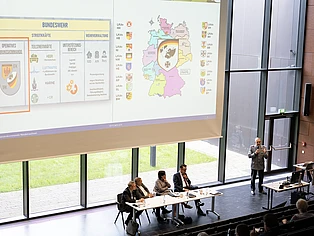
Following this, Oberst Daniel Decker and Oberstleutnant Horst Knauff from the Bundeswehr’s Lower Saxony and Hesse Regional Commands gave presentations on the current security situation and Operation Plan Germany (Operationsplan Deutschland). To help participants understand Germany’s role as a logistical hub, the officers provided insights into the current state of affairs and the tasks that are essential—even in peacetime—to ensure a stable infrastructural backbone for Germany. The discussion focused on what the Operation Plan Germany (Operationsplan Deutschland) specifically means for companies and how they can and should position themselves in the current complex situation to increase their own resilience. Hannes Oswald, security policy advisor at the Hanover Chamber of Commerce and Industry (IHK), supplemented the discussion with statistics showing a significant increase in incidents across various sectors.
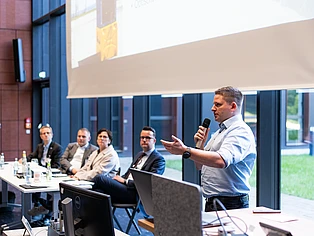
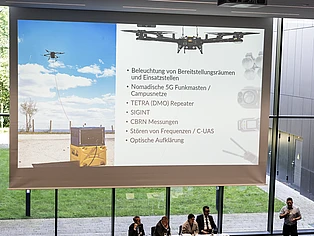
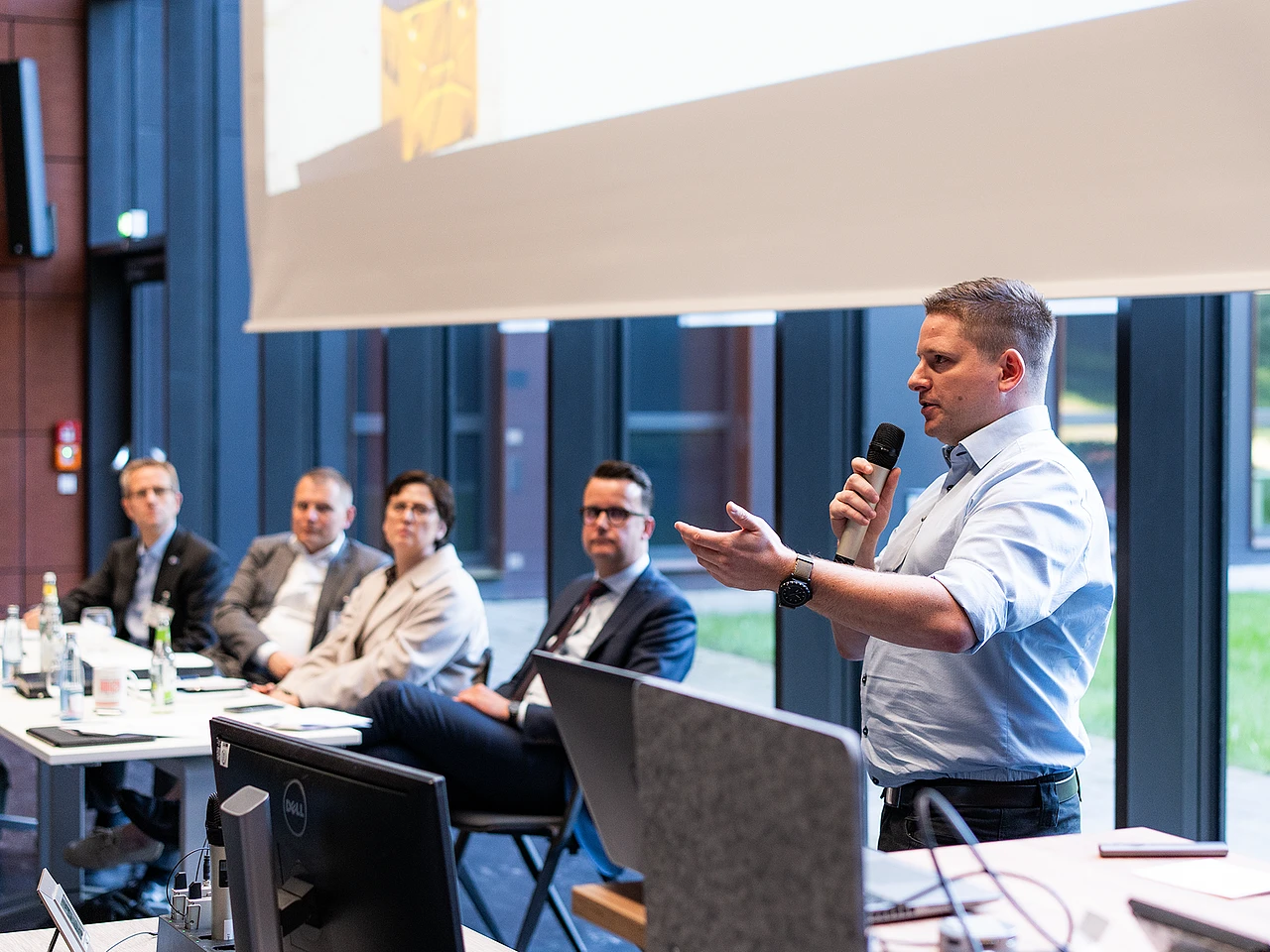
As the conclusion of the event Daniel Stahlmann gave a brief presentation introducing VALOFLY’s work and outlining the resulting opportunities for disaster and civil protection, the police, or the military. The presentation thus provided a link back to the Operation Plan Germany (Operationsplan Deutschland): Along the main routes, as well as any alternative routes, temporary communication channels must be established in addition to surveillance measures to protect against sabotage. The more agile this process can be, the easier it is to respond to unforeseen difficulties. Finally, to widespread approval, he drew attention to less resilient, because they are stationary, projects in local politics: Instead of financing the construction of a disaster response center for situation rooms and meeting spaces, Stahlmann proposed contractually involving larger companies. These companies already have security plans in place, have processes for validating access to their premises, and possess modern conference rooms.