

Tethered Drones in Traffic Analysis and Why This Technology Stands Out
To understand traffic, you need perspective—and that’s exactly what tethered drones provide. Unlike conventional stationary cameras, they can be flexibly positioned wherever they’re needed: at intersections with a high risk of accidents, on highway on-ramps where traffic jams are likely, or around construction sites. Once in the air, they offer a wide field of view that hardly any ground-based system can match.
The key advantage over battery-powered drones lies in the continuous power supply via the cable. This enables operations lasting many hours or even days—without landing breaks, without battery changes, and without interruptions in operation. This makes tethered drones particularly valuable for time-critical scenarios such as events, large construction sites, or continuous monitoring of accident-prone areas.
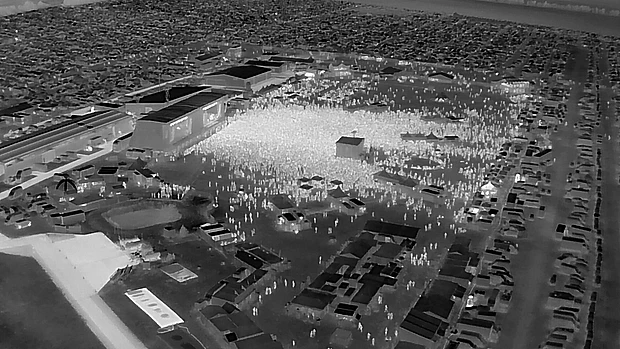
Support for major events and special situations
During city festivals, marathons, demonstrations, or evacuation scenarios, rapid and flexible aerial surveillance is essential. Tethered drones can be set up in minutes and provide an immediate overview without the bureaucratic hassle of obtaining flight permits for uncontrolled airspace. In addition, it is a more cost-effective alternative to police or government helicopters, offering the similar level of visibility and a longer flight time.
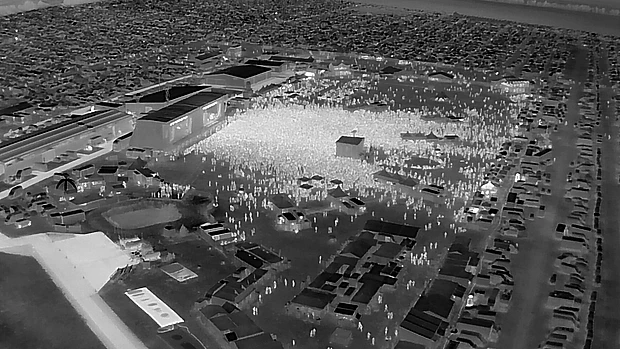
Objective accident analysis
Following a traffic accident, drone video provides comprehensive documentation of the situation from a bird’s-eye view. For investigators, insurance companies, and traffic planners, this serves as a reliable basis that supplements or replaces witness statements.
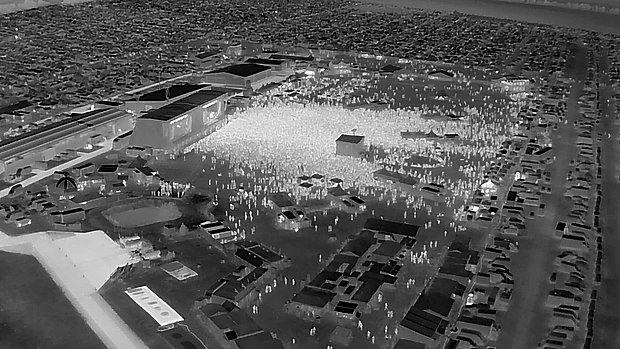
Data foundation for long-term urban planning
The collected footage can be used to analyze traffic flows, pedestrian behavior, and congestion at intersections. This provides cities and municipalities with a solid basis for making informed decisions about the construction of new roads, bike paths, or roundabouts.
Safety through physical tethering
The cable significantly minimizes the risk of a crash and makes operation safer even in densely populated areas. At the same time, it protects against signal jamming and cyberattacks, which pose a real risk for radio-controlled drones.